
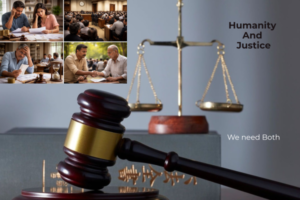
Access to justice is a fundamental right, rooted in the rights to equality, life, and free legal aid, yet many Indians avoid courts—turning the right to justice into a mirage.
Table of Contents
Background
Before moving forward to explore “Right to Justice”, it is important at this point to have a bird’s eye view of “Structure of the Indian Judicial System”.
The Indian Judicial system structure resembles an inverted tree, with authority flowing downward from the Constitution of India, the supreme legal foundation of the nation.
At the apex is the Supreme Court of India (SCI), the highest judicial authority. It interprets the Constitution, in case of need, handles original, appellate, and advisory jurisdiction while acting as the guardian of our Fundamental Rights.
Below SCI are the High Courts-highest judicial authorities in each State or Union Territory. They exercise original, appellate and original writ jurisdiction (under article 226/227 of Constitution of India) protecting fundamental rights, interpret law and supervise subordinate courts and tribunals under their territorial jurisdiction.
Below in the hierarchy are District Courts or Lower Courts known by various names across States due to administrative practices and historical factors, and colonial legacy. However, their powers and functioning remain largely uniform, as they operate under uniform procedural laws commonly known as the Code of Civil Procedure, 1908 (CPC), and criminal laws including the Bharatiya Nyaya Sanhita, 2023 (BNS) and the Bharatiya Nagarik Suraksha Sanhita, 2023 (BNSS), which have replaced the Indian Penal Code, 1860 (IPC) and the Code of Criminal Procedure, 1973 (CrPC), respectively. The role of lower courts is crucial for delivery of justice at grassroots level applying existing laws enacted by the Union and States, and they form the backbone of the judicial system.
In addition, India has an integrated network of quasi-judicial tribunals and Regulators created to ensure efficient and specialized justice in technical or sector-specific disputes, easing the load on regular courts. These include;
- Service and Administrative Tribunals.
- Corporate, Commercial and Economic Tribunals.
- Taxation and Revenue Tribunals.
- Banking, Financial and Recovery Tribunals.
- Consumer Protection Forums
- Infrastructure, Energy and Sector-Specific Tribunals
- Environment, Transport and Public Utility Tribunals.
- Constitutional and Special Purpose Tribunals.
Access to justice in India operates through four main pillars;
i) Criminal Justice System,
ii) Civil Justice System,
iii) Constitutional Justice System, and
iv) Administrative or Quasi-Judicial System.
However, despite the existence of a vast structure, “Right to Justice” remains elusive for many citizens.
Why People Avoid Courts for Seeking Justice?
Disagreements are common and unavoidable in daily life giving rise to a wide range of disputes. These are related to property disputes, contractual disputes, consumer disputes, family and matrimonial disputes of civil nature as well as disputes pressing criminal law into motion, apart from criminal, constitutional matters, banking and finance, administrative issues and service matters. The list is unending.
Courts and tribunals have been set up with the objective to provide free, fair, and final justice as ultimate authority. This right to justice is guaranteed under Articles 14 and 21 of the Constitution of India.
Yet, for an ordinary Indian citizen, entering a courtroom feels like climbing a mountain blindfolded.
Legal illiteracy, complicated procedures, high litigation costs and social barriers turn access to justice instead of empowerment into exhaustion.
Despite a robust, multi layered justice delivery system and specialized tribunals designed for efficient, targeted resolutions, yet many choose not to litigate at all, and silently enduring injustice as a way of life.
This reluctance is further fueled by real life stories of endless delays, skyrocketing legal costs, nerve-wracking uncertainties, malpractices and other systemic issues that favour the rich and powerful.
The gap between “Right to Justice” and the harsh reality of injustice is the reason why even highly educated people often “buy peace” through back room deals and settlements instead fighting for justice. Disputes are on the rise but most people fizzle out before reaching the court room chasing the easiest escape.
This raises a critical question
Why does a robust system designed to resolve conflicts, end up discouraging the majority of people from effectively using it , defeating its very purpose?
This blog dives into to explore the common reasons, social pressures, cultural norms, education gaps, money woes, and deep-rooted system flaws that block real access to justice in India. Let’s unpack a few points, one by one.
Justice Delayed Is Justice Denied
“Justice delayed is justice denied” is a well-known legal maxim that captures a harsh reality of India’s justice delivery system. Court cases often drag for years, sometimes decades, from initial filing to final resolution.
Delays arise from heavy case backlogs, shortage of judicial officers and staff, frequent adjournments, complex procedures, multiple appellate stages, and inadequate infrastructure. Proceedings are further prolonged by delaying tactics of opposite parties, poor case tracking and weak case management by the litigants.
Collectively, these factors make litigation slow, expensive, and exhausting, turning pursuit of access to justice into painful experience.
Practical Impact of Delays
- Loss of productive time, diverting focus from work, family life, and social life to continued court proceedings.
- Repeated adjournments causing stress, fatigue, and mental agony.
- Ongoing uncertainty, disrupting life, family and financial planning.
- Delayed reliefs reduce real value, discouraging others from seeking justice.
The glance of current pending court cases can be had by visiting the portal of Department of Justice i.e. The National Judicial Data Grid (NJDG) which provides data related to court cases for Supreme Court, High Courts, and District & Taluka Courts.
High Costs: A Barrier to Right to Justice
High costs demotivate people from approaching courts. Litigation is expensive, ongoing, and unaffordable for most. It is not just a one-time expense but costs keep accumulating at every stage of the case arising due to unforeseen expenses.
These expenses come on top of household and life priorities, often forcing difficult trade-offs and tough decisions. Many litigants face financial stress or fall into debt trap beyond means Sometimes, total costs outweigh the relief sought, especially in complex cases involving senior lawyers and payment of full fee upfront.
Common Expenses Involved
- Lawyer fees for consultations, appearances.
- Court fees and statutory charges.
- Document drafting, typing, filing and service costs.
- Travel and incidental expenses for repeated court visits.
- Enforcement costs for executing court orders.
- Loss of wages or business income due to time spent in litigation.
Mental and Emotional Exhaustion
Legal disputes are often deeply personal, and take a heavy toll on the person’s mental, physical and emotional health. The endless cycle of hearings, adjournments, gathering documents, pleadings, and interactions with lawyers drains energy and patience.
Over time, mental peace outweighs winning cases. Even successful litigants may feel defeated due to damage to relationships, self-esteem, and social life. In family separation cases, prolonged battles harm children’s growth and co-parenting, making mediated settlements more common. Litigation is an emotional rollercoaster.
Psychological Toll of Litigation
- Chronic stress and anxiety from uncertainty and repeated hearings.
- Sleepless nights and health issues crop up due to constant case preoccupation with the case.
- Strained relationships as legal stress spills over into family and social life.
Power Imbalance between Parties
Most legal battles are on uneven turf. One side, like corporate entities, banks or financial institutions, or government, having more resources and legal strength. Ordinary people with limited resources feel overwhelmed and disadvantaged. This imbalance makes individuals feel outpaced against well-funded, experienced opponents, turning constitutionally guaranteed right to justice into a distant reality.
Why Individuals Feel Disadvantaged
- Opponents often have superior, institution-backed legal teams and resources in comparison to individual litigants.
- Delaying tactics, like repeated adjournments drain everyday litigants mentally and psychologically.
- Repeat players, such as defaulting builders, mafia gain an advantage through familiarity with the system and inbuilt lacunae in the system.
Fear of Harassment or Retaliation
People fear more than just courtroom battles; they often get scared thinking threats, peer pressure, or retaliation outside court, especially from powerful opponents like influential individuals, groups, or lobbies, sometimes mafia. This adds real danger to the usual costs of time, money, and effort, making access to justice a risky venture.
Common Concerns
- Official harassment through notices, delays, and impediments.
- Deliberate hold-up in obtaining services or approvals, making life difficult.
- Backlash in social or professional life, from trained relationships or hidden pressure.
- Constant fear of losing and unknown consequences.
Uncertainty of Courtroom Outcomes
Even the strongest cases carry elements of risk and unpredictability. Outcomes can be affected by misinterpretation of facts, incomplete appreciation of evidence, procedural errors, incorrect recordings, inconsistent judgments or ambiguous orders. These uncertainties discourage many victims from pursuing litigation, rather preferring quick settlements, compromises. This encourages wrongdoer’s repeat misconduct.
Sources of Uncertainty
- Different interpretations of law by various courts or Presiding Officers.
- Technical objections that overshadow the core issue.
- Procedural errors, missing records, or incomplete recording of arguments, causing delays, order sheet management and conflicting decisions.
This weakens the very purpose of a strong judiciary, an important pillar of democracy.
Social Conditioning and Adjustment
In society, compromise is often seen as a mark of wisdom and maturity, while litigation is viewed as confrontation. A person pursuing justice gets labeled as a troublemaker. This social pressure pushes people to settle disputes quietly, even when they are right.
Friends and family often say:
“Why get into all this? Just enjoy life and move on.” They often give advice based on hearsay, without having elementary knowledge of the law or facts of the case.
Common Social Advice
“Adjust and move on.”
Instead, standing up against injustice and pursuing resolution can set an example for others and improve compliance. As Dr. Stephen R. Covey says in The 7 Habits of Highly Effective People:
“Begin with the end in mind.”
Reputation of the Legal System
Media reports of cases dragging on for years and decades, along with stories of confusing procedures, hidden bias, unclear motives, and slow enforceability of orders strongly shape public perception of the courts, and right to justice vanishes into thin air, despite the sincere efforts by lawmakers to enact effective laws and establish strong justice delivery system.
Resulting Public Belief
Many people are of the opinion that the system works for those with power, money, or connections.
Life Priorities Override Legal Battles
Many ordinary people believe that the justice system mainly benefits the rich, powerful or resourceful. This belief, shaped by other people’s negative experiences, discourages them from approaching courts and pushes them to focus on pressing socio-economic priorities.
Competing Priorities
- Work and livelihood pressures
Court visits, follow-ups, and case preparation clash with job demands, risking income or loss of workdays. - Family responsibilities
A legal fight consumes sizable time and energy needed for caring for children, parents and elderly, or family responsibilities. - Health and emotional well-being
Long court cases cause constant stress, anxiety, gradually eating away vitality. - Financial stability
Legal fees, court costs, and uncertainty hurt family finances making prolonged litigation hard to sustain.
When daily life and stability are at risk, justice often takes a back seat.
When Do People Still Invoke Right to Justice?
Despite delays, stress, and costs, determined people pursue cases till logical conclusion.
Litigation becomes unavoidable when:
- There is serious violation of basic or legal rights.
- Major financial loss or grave injustice has occurred.
- No amicable settlement or alternative resolution is possible.
- The case rests on a strong legal foundation and outcome can set a precedent for society.
Where justice outweighs personal hardship, approaching the court becomes the only option for access to justice.
People persist especially in cases involving:
- Dignity or core principles where compromise feels like betrayal.
- Widespread or repeated injustice affecting many including matters of larger public interest.
- Institutional failure and systemic issues needing accountability.
- Situations where silence would allow illegality to continue
These individual fights often lead to broader legal, systemic, or policy changes which coming generations rely upon as case laws and precedent.
Conclusion
A Key Takeaway for Citizens and Policymakers
People do not avoid courts simply because they accept injustice. They stay away because the real cost of litigation in time, money, energy, and mental peace involved is often too high.
A justice system should be judged not only by the fairness of its outcomes, but also by how fair, fast, affordable, and humane the process is. Until courts become efficient, more affordable, and truly user-friendly for ordinary citizens, compromise will remain the practical choice for many, though at the cost of allowing non-compliance to persist, defeating the very purpose of right to justice.
Ultimately the law of land must prevail.
“When the road to justice is longer than the injustice itself, compromise becomes a survival strategy.”
Disclaimer / Purpose Note
This article is solely intended to promote legal awareness and informed citizenship based on personal experience and observations of the writer. It does not seek to discourage rightful legal action, but to highlight the harsh realities that often shape individual perceptions and choices vis-à-vis access to justice and right to justice.
Right to Justice or way to Horror!
Right to Justice or way to Horror!
Not a Right but a Curse to the litigants and the defendants as well!
Nice attempt 👍
Thank you so much for encouragement.